

Garage door springs are built to handle thousands of cycles, but every open and close adds mechanical stress that gradually weakens the coils from the inside out. When that stress builds beyond what the spring can handle, the door loses its counterbalance and every connected component begins to absorb the extra load.
Each failure traces back to a specific cause that, if left unaddressed, can spread damage to other components of your garage door system. This article covers the most common reasons springs fail, so the problem can be identified and resolved before it escalates into an emergency garage door repair.
How Long Do Garage Door Springs Actually Last?
Most standard garage door springs are rated for around 10,000 cycles, and depending on how often the door is used and how well it is maintained, that limit can be reached in as little as 5 to 7 years.
Here is what that cycle count looks like in real life:
- A family using the residential garage door 4 times a day reaches 10,000 cycles in about 7 years
- A household using it 6 times a day can reach that same limit in under 5 years
- Two-car households with separate door cycles wear springs down at twice the rate
- High-traffic garages used for home businesses can burn through a spring in 3 to 4 years
- Even lightly used doors will eventually reach their cycle limit with age alone
To understand what a spring looks and feels like when it has reached its limit, read our guide on How to Tell If Garage Door Spring Is Broken, which covers every reliable indicator homeowners notice before a complete failure occurs.
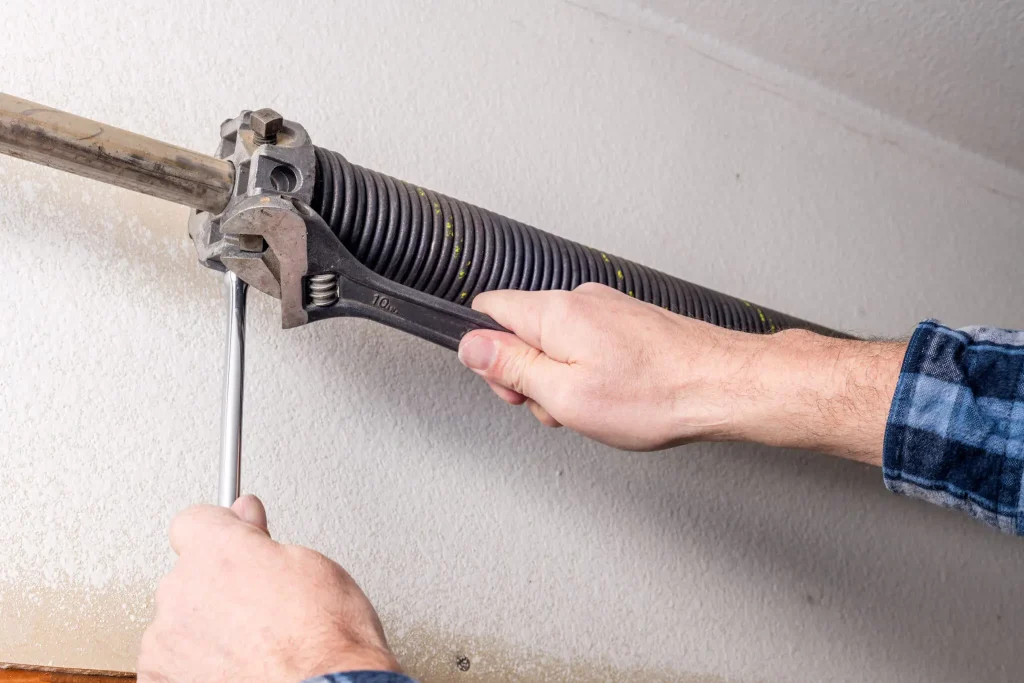
Common Reasons Why the Garage Door Spring Broke
Normal Wear and Tear From Daily Use
Every open and closed cycle builds mechanical stress inside the coils until the metal can no longer hold its rated tension.
Here is how normal wear builds up over time:
- Repeated stretching and compressing weaken the coil structure gradually
- Metal fatigue develops long before any visible damage appears
- Heavier doors demand more force from the spring on every cycle
- Multiple daily uses consume the cycle rating faster than expected
Normal wear is the leading cause of a broken garage door spring, and no spring is exempt, regardless of brand or the quality of the garage door installation.
Rust and Corrosion on the Spring Coils
Moisture exposure compromises the structural integrity of a garage door spring by eating into the metal from the surface inward.
Watch for these patterns:
- Orange or brown discoloration forming along the coil surface
- Rust particles are collecting on the floor directly beneath the spring
- Coils appear thinner in certain spots due to corrosion
- Rough or pitted texture where the metal has started breaking down
Rust reduces the tension the spring can safely hold, and a corroded spring will snap well before it reaches its rated cycle limit.
Lack of Lubrication and Poor Maintenance
Skipping regular lubrication forces every coil to grind against the next one, compounding wear at a rate that normal aging alone would never cause.
Here is what happens inside an unlubricated spring:
- Dry metal-on-metal contact generates heat that weakens the coils
- Friction between coils creates micro-abrasions that grow with every cycle
- Squeaking and grinding sounds develop during door operation
- Rust forms faster on unlubricated springs due to the absence of a protective barrier
Lubrication is one of the most direct ways to extend the life of your garage door springs, and skipping it accelerates coil wear with every single cycle.
Temperature Fluctuations in Naperville, IL
Seasonal temperature swings put garage door springs through repeated expansion and contraction, which strains the metal regardless of how often the door is used.
Here is how temperature affects spring integrity:
- Freezing temperatures make the metal brittle and more prone to snapping
- Rapid warming after a cold night causes sudden expansion in already-strained coils
- Repeated contraction and expansion create hairline fractures in the coil structure
- Springs with existing wear are far more vulnerable during temperature extremes
Harsh Naperville winters are a known contributing factor to broken garage door springs, and older springs require closer attention before each cold season.
Wrong Spring Size or Improper Installation
Using the wrong type of spring for the door’s weight puts the entire system under stress from the very first cycle.
Watch for these indicators:
- The door feels unusually heavy when lifted manually, despite the opener running
- Spring visibly strains or stretches beyond its design during operation
- Opener motor struggles or slows noticeably during the lift cycle
- One side of the door rises faster due to uneven spring tension
Wrong spring sizing is a technical error that a professional residential garage door repair technician can identify and correct during a standard inspection.
Sticking or Malfunctioning Hardware
When rollers bind, tracks bend, or bearing plates wear down, the spring absorbs the resistance that the hardware can no longer manage on its own.
Here is how failing hardware transfers load to the spring:
- Worn rollers create drag that the spring must overcome on every lift cycle
- Bent or misaligned tracks force uneven travel that strains the spring on one side
- Damaged bearing plates increase the friction on the torsion bar directly
- Loose or broken cables shift the door’s weight unevenly across the spring system
Malfunctioning hardware is one of the most overlooked contributors to premature spring failure, and regular maintenance keeps the spring load within its rated range.
Warning Signs That Your Garage Door Spring Is Failing
A failing garage door spring always leaves behind physical and operational clues that appear well before the coil fully breaks under tension.
Watch for these warning signs:
- A visible gap or separation between the coils means the torsion spring has already snapped
- A loud bang from inside the garage means the spring released all stored tension at once
- The door feels heavier than usual means the spring has lost its counterbalance
- Uneven or jerky movement means the spring has lost tension on one side
- Loose or hanging cables mean the spring can no longer hold proper tension
Every one of these warning signs is a clear indicator of a broken garage door spring that a professional technician should inspect before the door is used again.
Can You Still Open a Garage Door With a Broken Spring?
Technically, yes, a garage door can still move with a broken spring, but doing so puts the entire system at immediate risk with every operation.
Here is what happens when the door is forced open with a broken spring:
- The opener motor burns out from carrying the full weight of the door alone
- The door can drop suddenly without the spring holding the counterbalance in place
- Cables snap from absorbing tension that exceeds their rated load capacity
- Tracks bend or shift from the uneven load distributed across the system
- Hardware connecting the door panels weakens rapidly under the added strain
To get a full breakdown of the risks involved, read our guide on Can You Still Open a Garage Door With a Broken Spring?, which covers every safety concern and the proper steps homeowners should take before touching the door again.
Garage Door Spring Broken? Here Is What You Should Do
Knowing the right steps after a garage door spring breaks prevents further damage to every connected component and keeps the situation from escalating.
Here is what to do immediately after a broken spring is discovered:
- Stop using the door completely until a professional technician has inspected the system
- Use the emergency release cord to disconnect the opener if garage access is needed
- Avoid lifting the heavy door manually without the spring providing counterbalance
- Contact a professional who specializes in broken garage door spring repair to assess the full extent of the damage
- Expect the technician to inspect cables, drums, and hardware alongside the broken spring
To handle the situation properly from start to finish, read our guide on Garage Door Spring Broken? Here’s What to Do Next, which covers everything homeowners need to know from the moment the spring fails.
How to Prevent Your Garage Door Springs From Breaking
Preventing garage door spring failure comes down to consistent maintenance habits that address wear before it reaches a critical point.
Here is how to extend the life of your garage door springs:
- Lubricate the spring coils with a lithium-based spray at least once a year
- Schedule a professional garage door service inspection every 12 months
- Check the spring visually every few months for rust, gaps, or deformation
- Test the door balance regularly by disconnecting the opener and lifting it manually
- Replace aging springs before they reach their rated cycle limit
Consistent maintenance is the most effective way to prevent a garage door spring broken situation before it disrupts the entire door system.
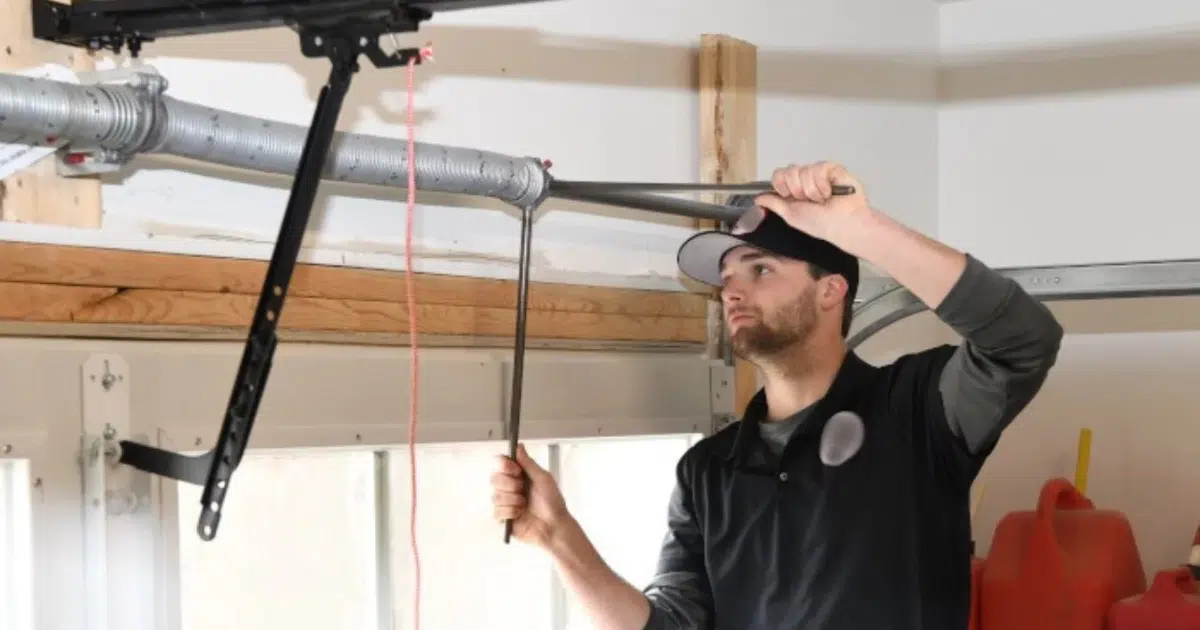
Know the Root Cause Before Your Garage Door Spring Fails for Good
Garage door spring failures build up over time through daily wear, moisture exposure, skipped maintenance, and seasonal temperature swings. Every sign the door gives is a message that the spring system needs professional attention before the damage spreads to every connected component.
Aladdin Doors Inc. has been helping homeowners in Naperville, IL, identify and address the exact reasons why garage door springs break before they lead to a full system failure. Contact us or give us a call today, and let us find the root cause and restore your spring system to proper working condition.
Frequently Asked Questions
What makes a brand new spring break shortly after installation?
A new spring fails prematurely when it is not matched correctly to the door's weight or when it is installed under improper tension. A professional technician should always verify the spring specification and tension calibration after every installation.
Is a worn garage door opener likely to damage the spring?
Yes, a malfunctioning opener that jerks or surges during operation applies uneven force on the spring beyond its normal load. That irregular force disrupts the spring's balance of tension and accelerates coil wear.
What role do frayed cables play in causing a spring to break?
Frayed or worn cables shift the door's weight unevenly across the spring system. That uneven load forces certain coil sections to absorb more stress than they were rated to handle.
Why do two-car garage doors put more stress on springs?
A two-car garage door is significantly heavier and wider, which places greater demand on the spring system from the very first cycle. Most double doors require two springs to distribute the load properly across the full width of the door.
Does the weight of the door material affect how fast a spring breaks?
Yes, heavier materials, such as solid wood, place significantly more mechanical stress on the spring with each cycle. A spring supporting a solid-wood door will reach its breaking point much faster than one supporting a lighter aluminum door.
Are power surges a contributing factor in garage door spring failure?
Yes, sudden power surges cause the opener to apply inconsistent force during the lift cycle, placing uneven stress on the spring. Repeated irregular force accelerates coil fatigue over time.
What happens to the spring when professional inspections are skipped regularly?
Skipping annual inspections allows minor issues such as cable fraying, hardware wear, and tension imbalances to go undetected. Those unresolved issues compound over time and place the spring under stress it was never rated to handle.
Is a damaged garage door panel enough to cause spring failure?
Yes, a damaged panel creates an uneven weight distribution across the door, forcing the spring to compensate for the imbalance on every cycle. That concentrated stress accelerates coil wear on the side carrying the extra load.
Why does applying too much lubricant shorten the life of a garage door spring?
Excess lubricant attracts dust and debris that accumulate between the coils, increasing friction over time. A thin, even coat of lithium-based spray applied once a year is the recommended amount for proper spring maintenance.
